Design around the subject, not the event.
The event is the container, but the buyer cares about a performer, graduate, athlete, or act. The product should make the subject the primary navigation object.
The value is not recording the event. It is getting the right moment to the right person before they have to search for it.
Role
Product framing, audience model, workflow critique, and evidence planning.
Audience
Event owners, production crews, institutions, coaches, performers, and families who need live-event video to become subject-specific clips instead of hours of footage.
Event capture
clip delivery
Delivered
Maya R.
Delivered
Jon B.
Delivered
Team 12
Roster, schedule, consent, and commerce resolve into one clip link.
Primary artifact
Per-performer clip delivery system
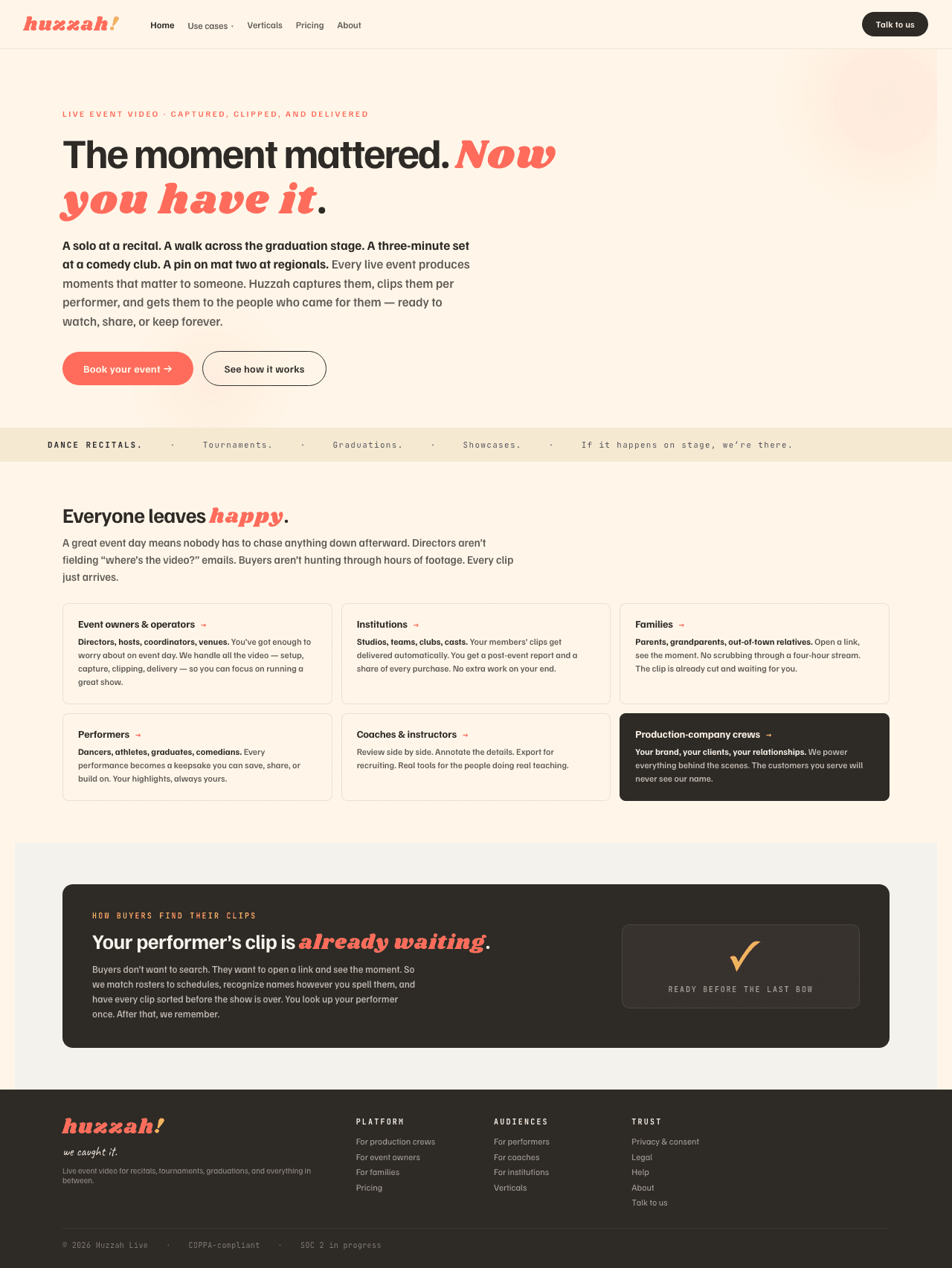
Live artifact: huzzah.live positions the product around turning event footage into performer-specific clips buyers can actually find.
01 — Context
Huzzah turns recitals, tournaments, graduations, showcases, and other live events into clipped, purchasable, shareable media. The hard product work sits between event operations and family expectations: capture has to keep running, rosters and schedules have to line up, buyers need to find the right performer quickly, and privacy cannot be an afterthought.
Product Question
Can live-event video behave like direct fulfillment for each performer instead of a generic recording or livestream?
02 — Problem
Most event video asks buyers to do the work after the event: find the right recording, scrub through a long timeline, guess the right timecode, and share a rough link. That creates support load for operators, weak conversion for crews, and a disappointing experience for families who only wanted one meaningful moment.
03 — Evidence
Promise
The site does not lead with cameras or streaming. It leads with the moment after the event: a clip that has already been captured, cut, and delivered to the people who care.
Discovery
The family flow is built around roster matching, schedule windows, number recognition, consented recognition, and natural-language search so buyers do not need to scrub through the event.
Operations
Event owners need offline-tolerant capture, integrations, privacy controls, and support. Production crews need white-label delivery, contractor workflows, commerce, and reporting.
04 — Product Judgment
The event is the container, but the buyer cares about a performer, graduate, athlete, or act. The product should make the subject the primary navigation object.
Families, operators, crews, coaches, institutions, and performers each need different proof. A single generic page would hide the operational model that makes the marketplace work.
Youth events, private venues, paid downloads, and share links need consent, opt-out, audit, and ownership rules built into the workflow rather than attached later.
05 — Evidence Plan
Capture a complete buyer path from event lookup to performer search to purchased clip, then pair it with an operator-side view of schedule data, capture status, privacy controls, and post-event reporting.
Open Questions
Which search method should be trusted first when roster, schedule, and recognition signals disagree?
What does the buyer see when a clip is not ready yet or requires consent before sharing?
How much operational detail should be visible to event owners before it starts to feel like extra work?